
LVAAS General Meeting at South Mountain
Sunday, November 8 at 7 p.m.
Presentation is via Zoom
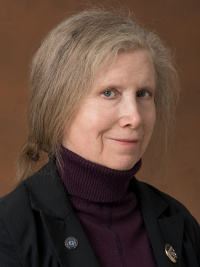
More Info About Dr. Bonne Buratti
formation, evolution, and current state of planetary systems, with a focus on volatile transport in
the outer Solar System and deriving surface properties of planetary surfaces. She has held
leadership roles on several NASA flight projects and advisory committees, and she is currently
serving as the Deputy Project Scientist for the Europa Clipper Mission. She is a recipient of the
Carl Sagan Medal, and the NASA Exceptional Achievement and Exceptional Public Service
Medals. She is the author of the popular book “Worlds Fantastic Worlds Familiar” (Cambridge),
and the Hildian asteroid 90502 Buratti was named in her honor. Bonnie is a native of Bethlehem
and graduated from Southern Lehigh High School.
Prospective new members who wish to attend the meeting should email membership@lvaas.org
LEHIGH VALLEY AMATEUR ASTRONOMICAL SOCIETY
620B East Rock Road, Allentown, PA 18103 • 610-797-3476
Founded in 1957, the Lehigh Valley Amateur Astronomical Society (LVAAS) is one of the oldest continuously operating amateur astronomy organizations in the U.S. Our mission is to promote the study of astronomy and maintain meeting spaces, observatories, and a planetarium.
LVAAS operates two astronomy sites. The South Mountain site in Salisbury Township serves as Society headquarters and includes a planetarium with a Spitz A3P projector and 21-foot dome, meeting space, the Red Shift Store, Library, and three observatories.
The Pulpit Rock site near Hamburg is our members-only dark-sky site. Located at 1,600 feet above sea level, it features three observatories and a pad for members’ telescopes.
Members who complete scope training may obtain observatory keys. LVAAS also maintains a rental fleet of telescopes available to members at low cost. Members receive access to The Observer, our online newsletter, plus reduced subscription rates for Sky & Telescope and Astronomy magazine.
Interested in learning more about astronomy and LVAAS? Join us at our next public star party.