
LVAAS Headquarters & South Mountain Observatory
Located atop South Mountain in the Lehigh Valley, the LVAAS Headquarters and Observatory complex provides a unique facility for exploring the night sky through telescopes, observatories, and a planetarium.
South Mountain Observatory
The South Mountain Observatory is the home of LVAAS’s astronomical facilities. The site includes multiple observatories, each designed to provide excellent access to the night sky for visual observing, astrophotography, and educational programs.
From nearby planets and the Moon to distant galaxies and nebulae, the observatory allows visitors and members to experience the universe through a variety of astronomical instruments.
Observatories at South Mountain
Knecht Observatory
The Knecht Observatory is attached to the main building while still providing access from outside for observing sessions.
Warden Observatory
The Warden Observatory is one of two roll-off style observatories at LVAAS. Its open design provides plenty of space for observers and equipment.
The observatory also features an accurate sundial mounted on the south wall, connecting modern astronomy with traditional methods of measuring the movement of the Sun.
Brooks Observatory
The Brooks Observatory features a fully electric dome and houses the most powerful telescope at South Mountain.
The observatory was refurbished in 1998, replacing the original 12.5-inch Cassegrain telescope with a more modern instrument to expand observing capability.
The South Mountain Planetarium
The LVAAS Planetarium provides an immersive way to explore the universe regardless of weather conditions or time of day.
Visitors can learn about the stars, constellations, planets, and the motion of celestial objects through simulated views of the night sky.
The planetarium complements the observatory by helping visitors understand what they see through the telescopes outside.
Exploring the Universe
Together, the observatories and planetarium at South Mountain provide a complete astronomy experience — combining hands-on telescope observing with education about the structure and motion of the universe.
The facility continues LVAAS’s long tradition of sharing astronomy and inspiring curiosity about the cosmos.
History
1957–1963 · Status: done, and still home.
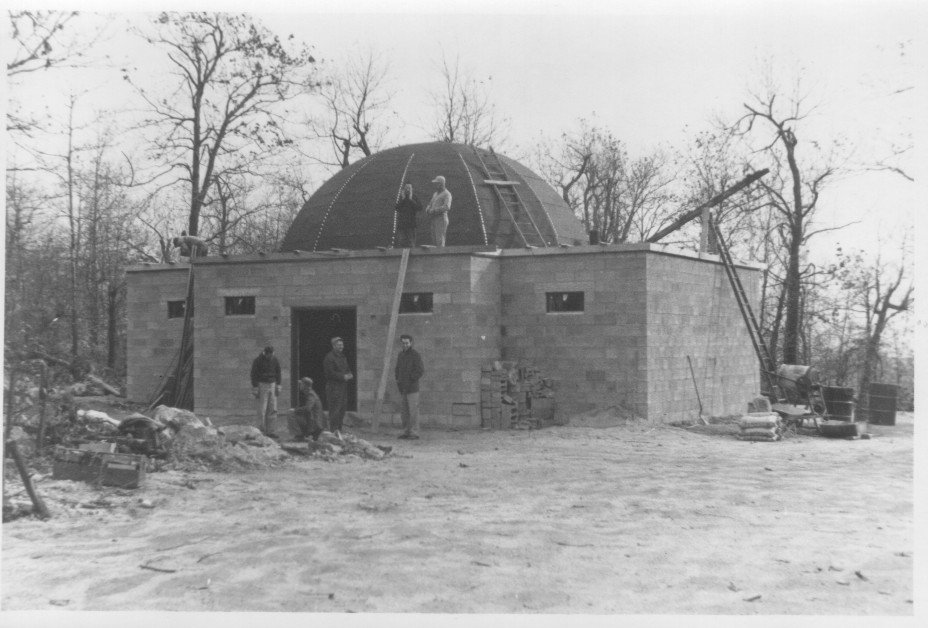
Within months of the founding meeting in October 1957, the new Society went looking for land of its own — and found it through the generosity of an unlikely patron: the original owners of radio station WFMZ granted the club one acre on their station site, one of the highest points of South Mountain in Allentown.[1]
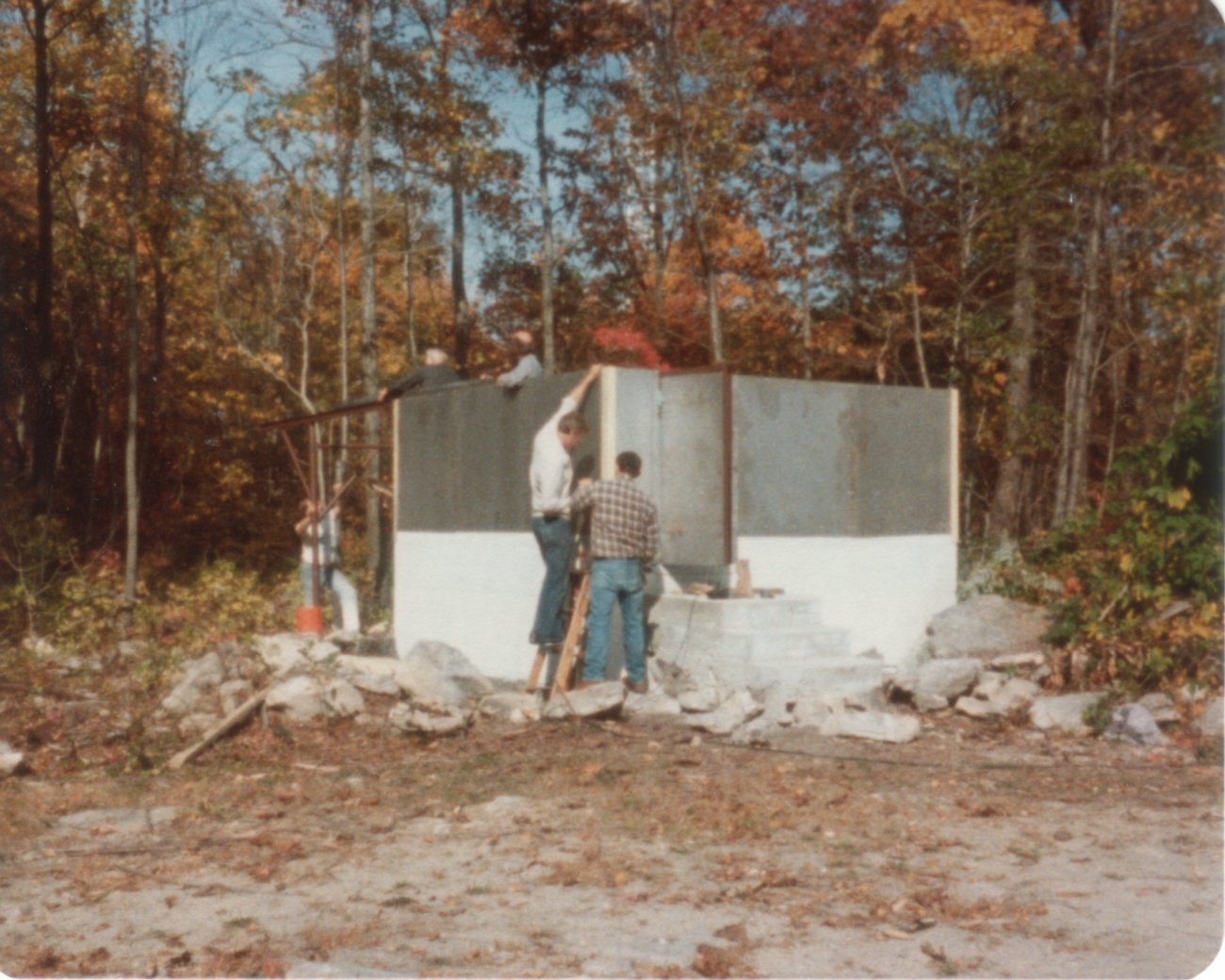
Ground broke in late spring 1958.[1] What followed was years of member labor — ditches dug by hand, a construction program that ran long past the point where most clubs would have lost heart. Members ordered mirror kits, tube blanks and mountings and built their telescopes in the same spirit they built the building.
In September 1963 the headquarters was formally dedicated, with Dr. Peter van de Kamp of Sproul Observatory as the speaker, joined by Armand Spitz — designer of the Spitz planetaria — and Ed Bailey of the Franklin Institute’s Fels Planetarium.[2] The observatory took the name of D. George Knecht, the Allentown dentist whose 1927 conversation with a sixteen-year-old had set Ralph Schlegel on the road to telescope making.[3]
Inside worked the 6-inch Knecht refractor, and curator Joe Grady and his assistants built a public program — blackboard talk, slides, a planetarium show, and peeks through the telescopes when the sky cleared. “The visitors can’t seem to get enough,” the Observer reported in November 1963.[2]
The building has been renewed ever since: the Grady Planetarium addition in 1986, the Robson Library, new tile floors and the Red Shift renovation in 2004.[4] Sixty-nine years of work parties later, it is still the club’s downtown.
Sources: [1] 1962 membership brochure; Observer retrospective. [2] Observer, September & November 1963. [3] Sandy Mesics, A Brief History of the LVAS. [4] Observer, February–August 2004.